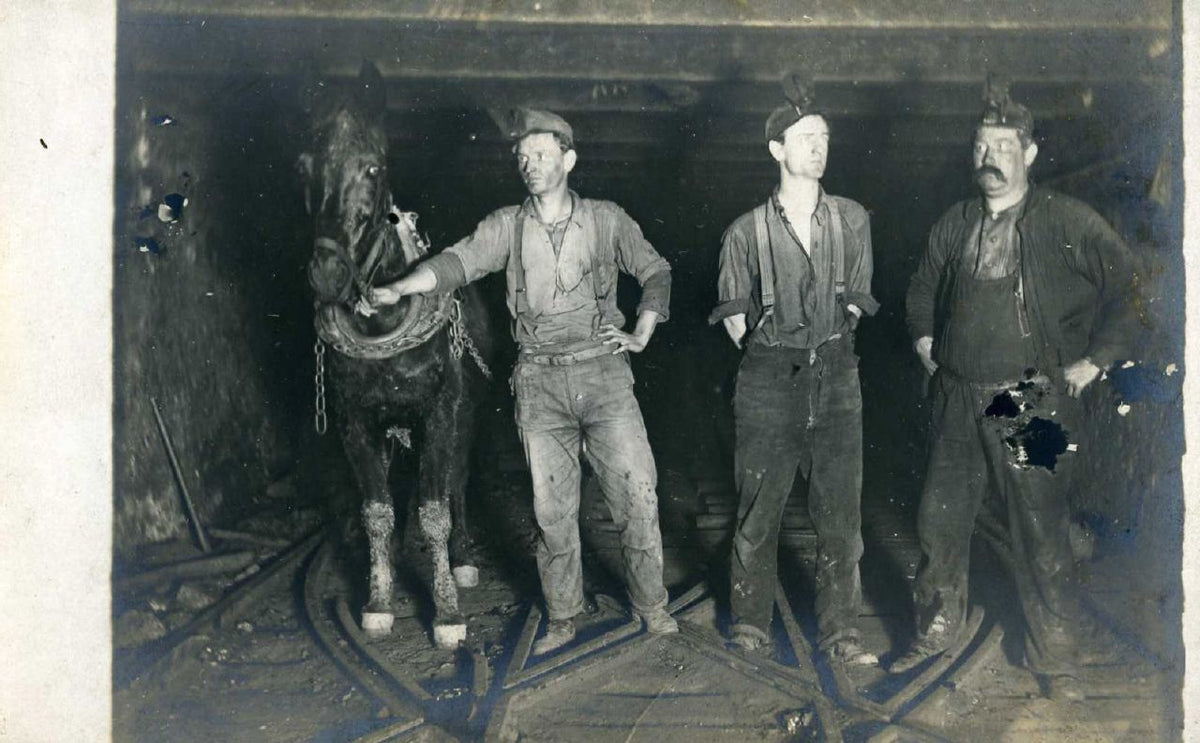
Thanks to a recent project here in the workshop, and following a bit of a tangent, we became interested in the famous Davy lamp of the early 19th Century. This in turn made us think about the old-time coal miners, and what sort of everyday carry items they would have used down the pit.
Lighting the Way
British chemist Humphry Davy (to become both a Sir and President of the Royal Institution in due course), came up with his design for a miners safety lamp in 1815 which protected against the pockets of volatile gas found in coal seams (called firedamp). These accounted for many lives each year due to explosions caused by the naked candle or lamp flames miners used to light their work.
His design utilised a wire gauze frame over the flame which basically absorbed most of the heat which is what ignited the gases, while allowing enough light through to still work by. Hitting a pocket of gas still caused the flame to change colour which then warned the miners of its presence so extra caution could be taken.
By sheer coincidence, at exactly the same time, a mining engineer at Killingworth Colliery in Northumberland by the name of George Stephenson, was coming up with pretty much exactly the same solution. Although he lost the war of words that followed over who was the first to invent it he still did alright for himself, as yes, he was THAT George Stephenson, famous inventor of the first steam locomotive named (altogether now..) "The Rocket."
Coal and other miners now use modern rechargeable led lamps (see further below) fitted to their safety helmets which use lithium-ion batteries which are both lightweight and last right through a shift. No more carrying heavy battery packs on miners belts.
If You Want to Get Ahead, Get a Hat.
While we might think of protective helmets as being an obvious requirement if you are working deep underground amongst rock and other hard or unstable surfaces, the early miners were not so well taken care of. In fact back in the early 1900's you were probably only wearing a typical cloth flat cap of the era, or maybe something like a "Tull" which was a stiffened hat made of felt soaked in pine resin, or moulded from boiled leather which gave slightly more protection probably, but not much. Interestingly though, this shape has been attributed as an inspiration for the steel Brodie helmet of WW1 used by British Tommies in the trenches.
Today's coal miners use the typical hard hats you will recognise made of thermoplastic or ABS. They come equipped with mounting plates for the led lights mentioned earlier and now are also beginning to integrate digital displays, tracking tags, and two-way radio.
Time and Place
Nowadays miners can wear modern water and shockproof watches with integrated backlighting to easily check the time, but their forebears who used more delicate pocket watches had to come up with a way to protect them when down the mine.
The answer was a heavy gauge brass protective case which both guarded against crushing and dropping, and with thick glass to keep coal dust and moisture out but allow the dial to be read to keep track of their shift.
Checks, Tokens, Tallies & Motties.
One of the key safety measures taken at coal mines was tracking exactly who was underground on each shift so everyone could always be accounted for, or identified, in case of an emergency. They did this through use of metal tokens or "motties", also known as checks or tallies depending on which part of the country you were in.
They were often made from brass but also copper, zinc or aluminium as well, and stamped with the name of the Colliery typically and a unique alphanumeric indicator code. The miner would have two tokens per shift. One he would keep on him and the other he would give to the "banksman" before entering the mine via the lift.
This simple system was so effective it remained in use until the 1990's when magnetic swipe cards started to replace them. Even so, they were often retained as a failsafe system just in case. Incidentally, a quick bit of research also shows, perhaps surprisingly, that the last canaries were retired from detecting gas in mines in the UK around the same time!
Snap Time.
If you were spending 8 hours or more on a long hot shift deep underground then you needed to carry your food and water with you. The miners version of a lunchbox was called a Snap tin thanks to the distinct 'snap' sound it made when closing. This became so synonymous with the lunch itself that this also became known as "snap" in certain parts of the country. Other areas had their own regional terms such as bait, piece, and jackbit. The tin was metal to keep out the rats and mice, and the original shape echoed the tall loaves of bread of the time, so a good old fashioned doorstep sandwich would fit in neatly, most likely filled with jam or dripping.
Water of course was also essential in such a hot and dusty environment so metal flasks or canteens called "Dudleys" were carried, named after the midland town where they were made. They held around 3 pints of water and you can bet that was all probably drunk well before the days end.
The more modern miners fare a little easier where underground lunch or break rooms exist, being able to warm up foods even. Sandwiches and protein bars are also mainstays.
Take Your Pick.
In terms of the actual EDC tools a coal miner would carry back in the day before mechanisation, the most synonymous would have to be a coal pick, also known as a mandrel. The steel pick head was not actually fixed to the wooden shaft (often made from Ash in the UK or Hickory in the US) which meant miners could slide the head off the shaft at the end of the day and just take that to the surface for sharpening or replacement as needed. There were different sizes and styles of pick for use depending on whether they were swinging the pick or perhaps prising larger lumps out of the seam along fractures.
While picks are not used any more, another tool that continues to be important is the bronze hammer. Whereas steel hammers can cause literal sparks to fly when striking rock, not what you want in a potentially volatile environment filled with coal dust and possible gases, bronze does not spark and so is still used today.
The Final Shot.
Finally, (and we're basically including this as we found it so interesting) is another tool that would have been carried by shotfirers; the explosives guys blasting at the coal or rock face. This shot firing tool incorporates a long metal spike used for making the hole in the explosive charge in order to place the detonator, and then is also the key to fit in the exploder/shot firing device when its time to make it go bang! The additional key was probably for the lockbox in which the exploder was stored.
Addendum.
If like us you are fascinated by the inventing process, then this great little 5 minute video from the Royal Institution where Humphry Davy actually invented his safety lamp, is well worth a watch for a practical demonstration of the concept.
ANCIENT EGYPTIAN EDC
Knives and daggers
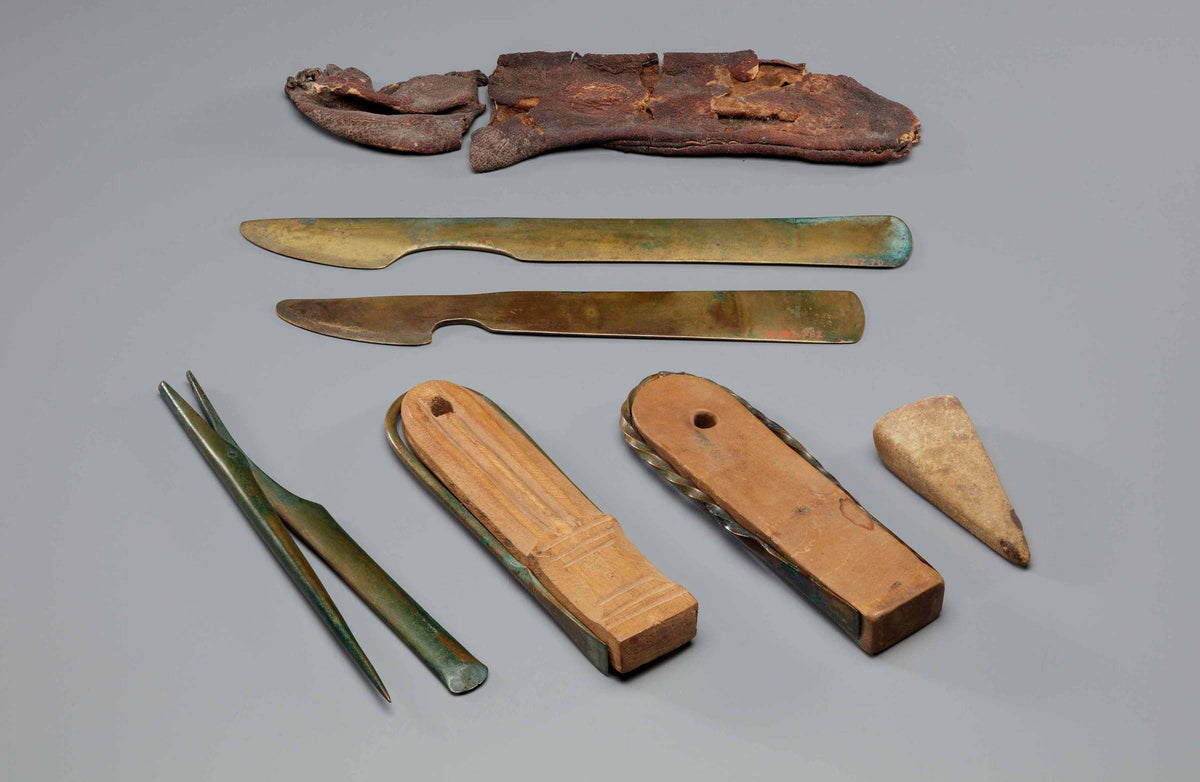
These initially would have been made from flint or obsidian, and then migrated to metal blades over the centuries. Firstly copper, and then the harder bronze...